what that headline failed to mention is that it links to a kickstarter! it ends on may 13th, and it’s not yet halfway to the goal of $10,000. so more people need to be seeing this.
over $9,000 now! it’s so close and such a great idea!
no but seriously I still get chills thinking about turning off my headlamp in the cave and The Hand That I Did Not Actually See, and it’s been twelve years since it happened
it’s such an unreal experience
like
you turn off your light in a cave and wave your hand in front of your face
and
you can see this shadowy thing moving in the black space where your hand is
it looks like the same shadowy thing you would see in your room at night if you waved your hand in front of your face, it’s there and vaguely hand-shaped, and your brain recognizes it as your hand because your brain is aware of where your hand is and what it is doing
But You Are Not Seeing Anything
Inside a cave, there is No Light. No matter how far your pupils spread, there is no light for them to draw in, no light to put an image on your retina.
But your brain just Fucking Assumes that because it knows where your hand is and what it is doing, clearly it can see it.
So it creates a shadowy thing for your eyes to be seeing.
Brain is like “there’s a hand there”
Eyes are like “yup sure thing brain I can totally see it”
Brain is like “nice”
but there is no hand, you cannot see the hand, you are seeing a literal actual hallucination in the cave because your brain thinks it knows best
Caves are awesome, but also terrifying. Thank you for coming to my TED Talk.
we once went spelunking, and a our guide said that once he was in a cave with a stream, so he could hear running water, and his brain was like ‘oh, running water? that means there must be Ducks out there’. and he saw like…low light shadows of ducks. that his brain just Put There.
As a cave guide: we call that ‘cave blindness’! True darkness absolutely wigs your brain out – we’re such visual creatures that after a while our brain throws a hissy after not seeing anything. Sensory deprivation is a very real kind of torture. We have a huge, deep cave system at work and there are a lot of places where you’re hundreds of meters in solid rock in this tiny, dark, still space.
I like to turn my torch off, sit down with my back against the wall, and wait to see how long it takes before I start seeing things or feeling like the ground is moving, or hearing things. Because I know I’m not – I’m in complete darkness, utter silence, sitting in rock that hasn’t moved in hundreds, if not thousands, of years.
Proof that brains are Ridiculous and over-react to a lot of stuff!
Oh god, this is so cool to know! I always have to close the door of my bedroom when i go to sleep, because when i lay down and look into the dark hallway, i S w e a r , is see someone standing there. I thought I was just paranoid lmao!
@blackestsins Seeing figures in lowlight conditions is less likely to be your brain straight up making you hallucinate (yes, cave blindness is technically a hallucination) and more probably a type of pareidolia!
Human brains are hardwired to pick faces and humanoid shapes out of literally anything. We are geared to recognize patterns. We love patterns! It’s part of why we love music, and have languages! It’s also probably got a lot to do with people seeing ‘ghosts’ in images.
You can literally think of it like your brain’s facial recognition asking you ‘Would you like to tag a friend?’ when you’re looking at the dappled shadows of leaves on the ground. Your brain is so good at picking out shapes that it fools itself and misinterprets completely benign stuff as a face or a figure.
In your case case of dark figures in doorways, which is by no means uncommon, your brain is working overtime in a lowlight situation, we can’t see all too well at night so it kind of… over-values the limited information it’s getting because hey, it’s safer to take a guess that something is there when nothing is, then to not recognize a very subtle hint that something is there. Your brain can ‘see’ a shape there and it’s going to place the ‘safe’ bet of it being ‘something’, even when it’s literally just the outline of your doorway. An over-reaction, sure, but hey, brains are trying their best!
I got a particularly bad case of this when I moved into a new house. I would have bet money that someone was standing in the middle of my hallway, which I can see through my open door. I couldn’t figure out where the shadow was being cast – until my neighbours put up fairy lights and suddenly the Dark Figure In The Hallway had a flashing outline. It turns out that the window in my laundry lined up with that spot on the hallway, and the ambient light of the night was casting the shadow of the corner of my washing machine and clothesrack onto the hall!
Project from Do Something Good is an online CAPTHCA which claims that only machines can pass. There is an ongoing debate on the Programming subreddit trying to decipher how it works.
a CAPTCHA (Completely Automated Public Turing test to tell Computers and
Humans Apart) that filters out humans and only lets programs pass
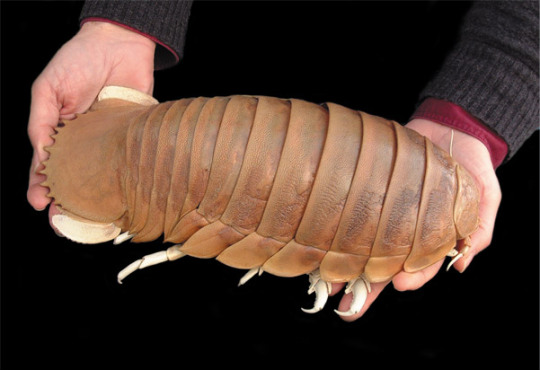
Nevermind all the buzz about Tide pods, get ready for…ISOPODS!
Here’s one for you to enjoy:
Pretty nice, right? I agree. Let’s learn about them!
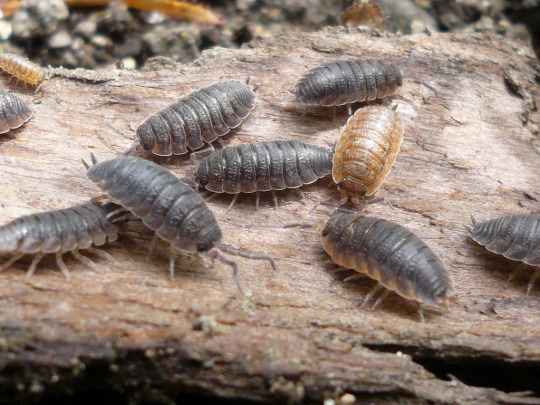
Isopoda is an order of crustaceans that includes woodlice and their relatives. These are woodlice, often called roly-polies or potato bugs:
Woodlice mostly feed on dead plant material, and they are usually active at night, so we have a lot in common.
Several centuries ago when I was in high school, we raised them in science class. They are good, friendly fellows. Please don’t kill them.
Isopodscan also live in water! Wow!
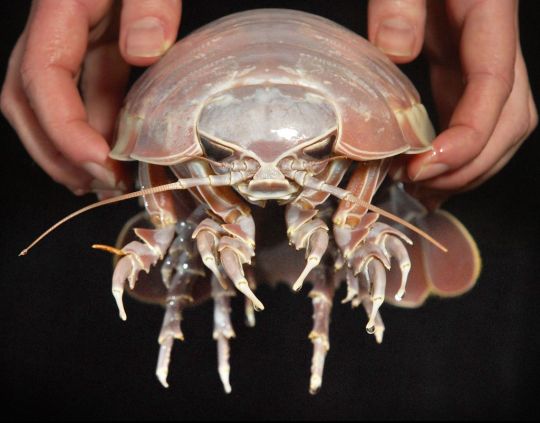
There are almost 20 species ofgiant isopod in the genus Bathynomus. They are abundant in the cold, deep waters of the Atlantic, Pacific and Indian Oceans and can be as long as 30 inches. Holy cow. That’s bigger than my dog.
They may look large and scary, but they are mostly opportunistic scavengers, feeding on dead whales, fish, and squid, and occasionally slow-moving live animals like sea cucumbers and sponges.
Food is scarce in the deep ocean, and giant isopods have adapted to long periods of famine; in captivity, they’ve been known to go five years without eating. I guess if I had to eat soggy dead whale blubber, I’d wait five years, too.
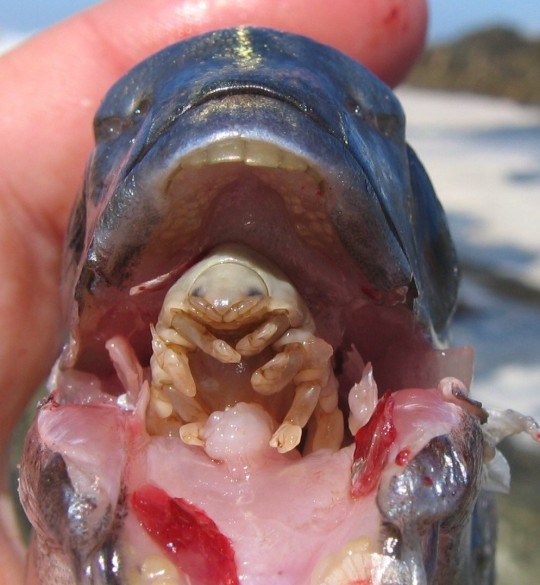
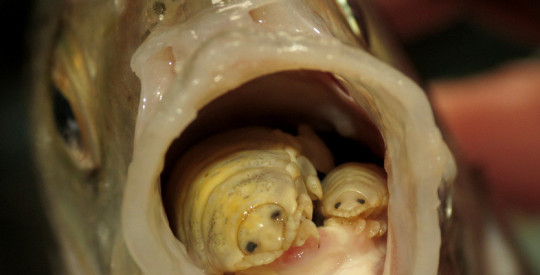
Just like Tide pods, I wouldn’t recommend putting these into your mouth. It’s just as horrifying as it sounds. Here, have this photo for your nightmares:
The tongue-eating louse is a parasitic isopod that enters a fish’s mouth through the gills, attaches itself to the tongue and severs the blood vessels there. The tongue eventually falls off and the isopod functionally acts as the fish’s new tongue, all the while sucking its sweet, delicious fish blood.
It appears that the parasite does not cause much other damage to the host fish, but I suspect any research scientists failed to ask the fish how they felt about it.
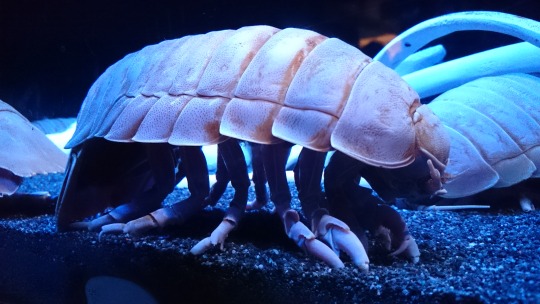
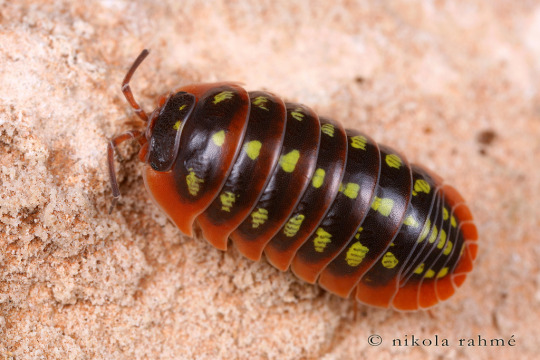
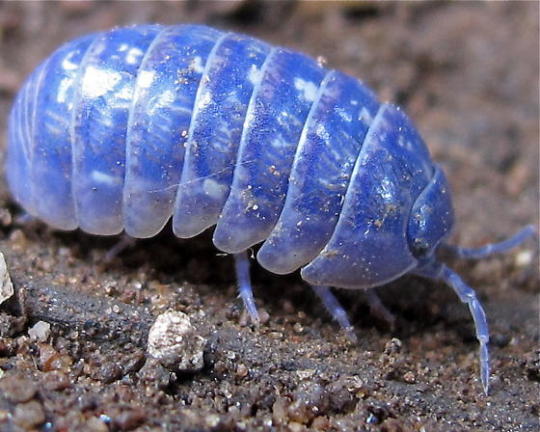
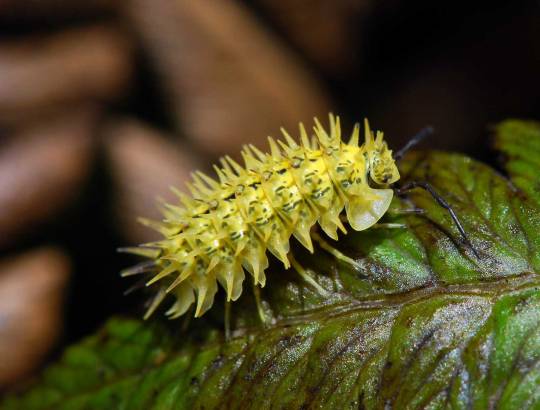
There are over 10,000 species of isopod worldwide, so I’ll wrap this post up by sharing just a few more colorful varieties.
Thank you for reading about isopods! I hope you now consider them friends. Even the tongue-eating ones, who make some very questionable life choices. But who are we to judge, you know? Anyway, have a great day.

 Time's Vengeance