just–space:

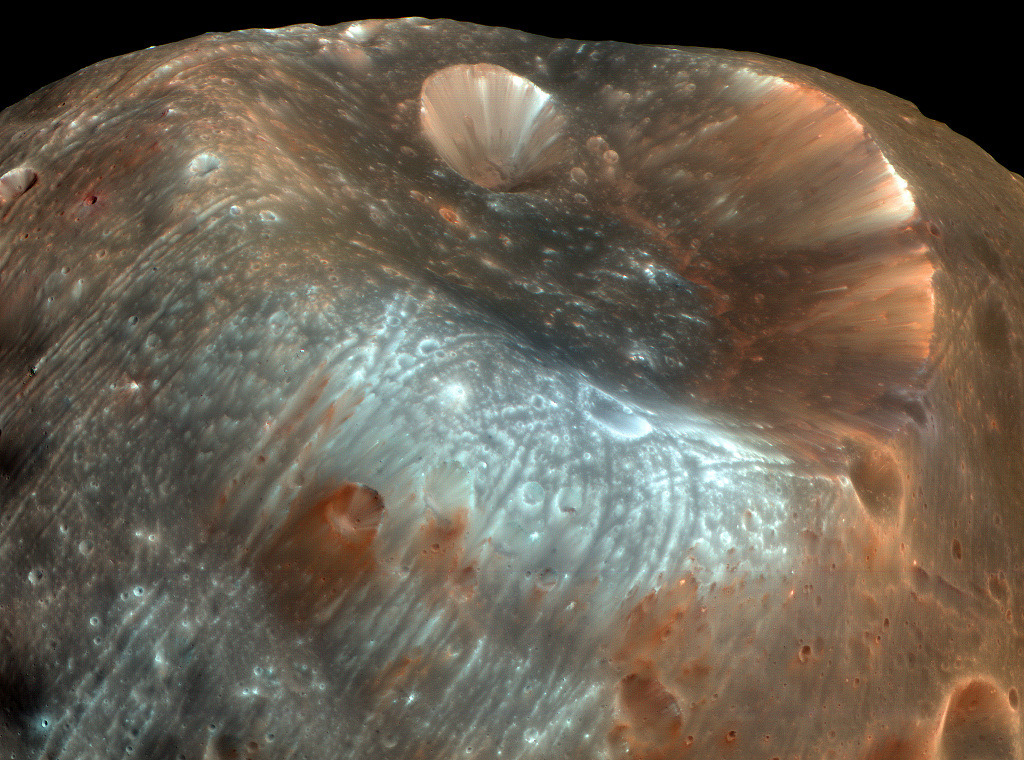
Stickney Crater : Stickney Crater, the largest crater on the martian moon Phobos, is named for Chloe Angeline Stickney Hall, mathematician and wife of astronomer Asaph Hall. Asaph Hall discovered both the Red Planet’s moons in 1877. Over 9 kilometers across, Stickney is nearly half the diameter of Phobos itself, so large that the impact that blasted out the crater likely came close to shattering the tiny moon. This stunning, enhanced-color image of Stickney and surroundings was recorded by the HiRISE camera onboard the Mars Reconnaissance Orbiter as it passed within some six thousand kilometers of Phobos in March of 2008. Even though the surface gravity of asteroid-like Phobos is less than 1/1000th Earth’s gravity, streaks suggest loose material slid down inside the crater walls over time. Light bluish regions near the crater’s rim could indicate a relatively freshly exposed surface. The origin of the curious grooves along the surface is mysterious but may be related to the crater-forming impact. via NASA
charlesoberonn:

roaringstream:

vandrop:

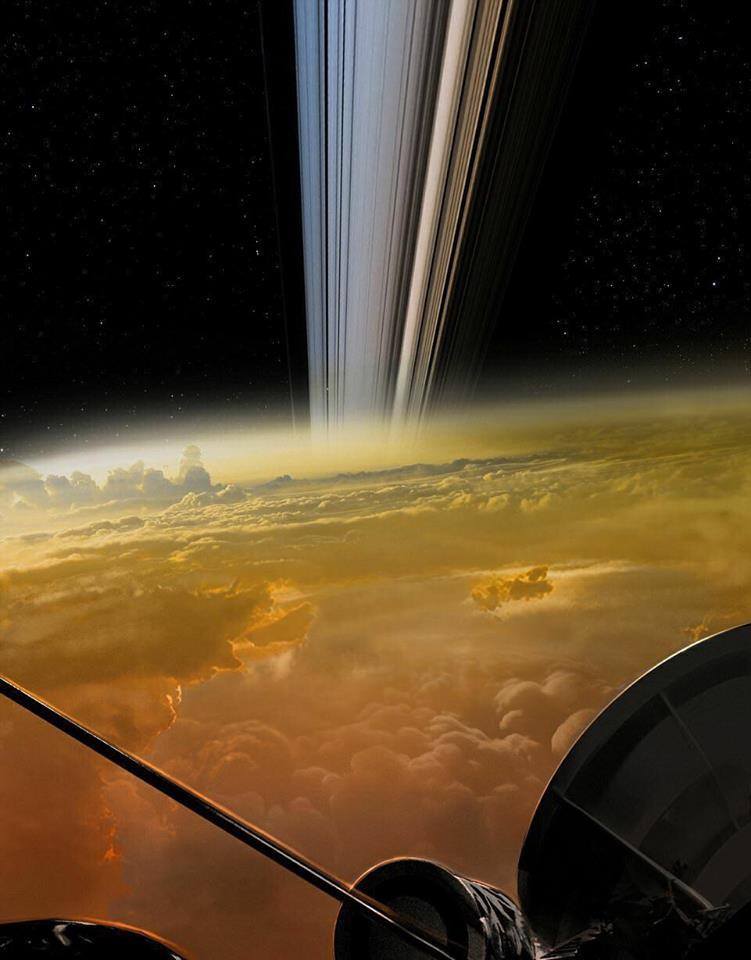
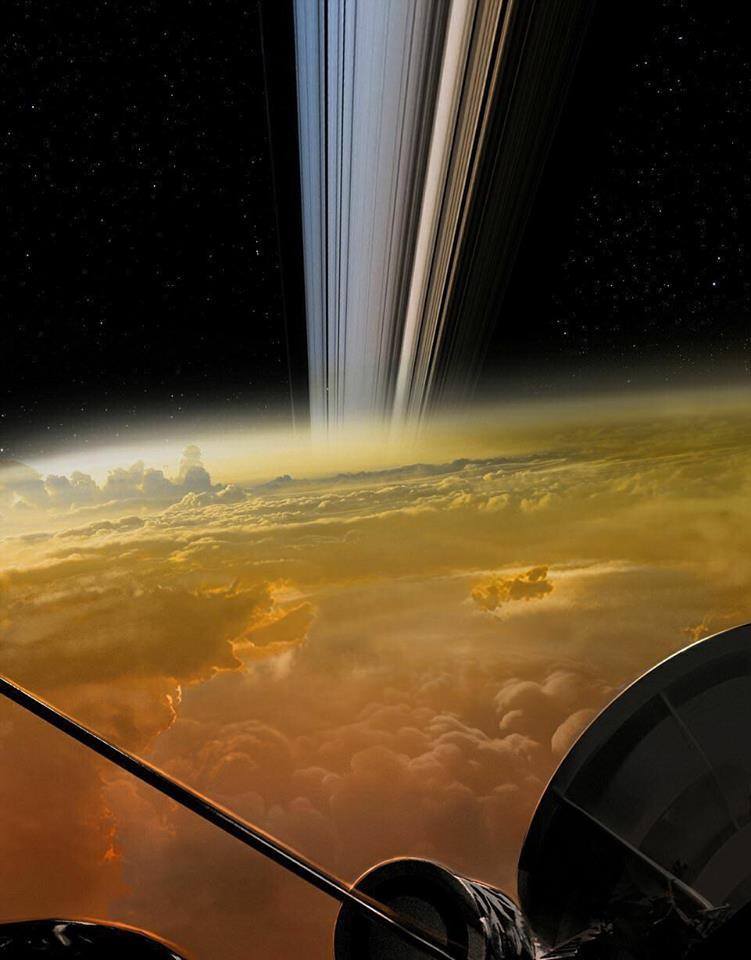
Cassini’s last image before entering Saturn’s atmosphere and burning up. Wow !

That is not Cassini’s last image. That is an artist’s impression of Cassini’s final dive into Saturn’s atmosphere.

This is Cassini’s image. Taken from 400,000 km away (the distance between the Earth and the Moon) and a lot blurrier.

ulvdakota:

wheezis:

sourdoughnibblers:

itsfullofstars:

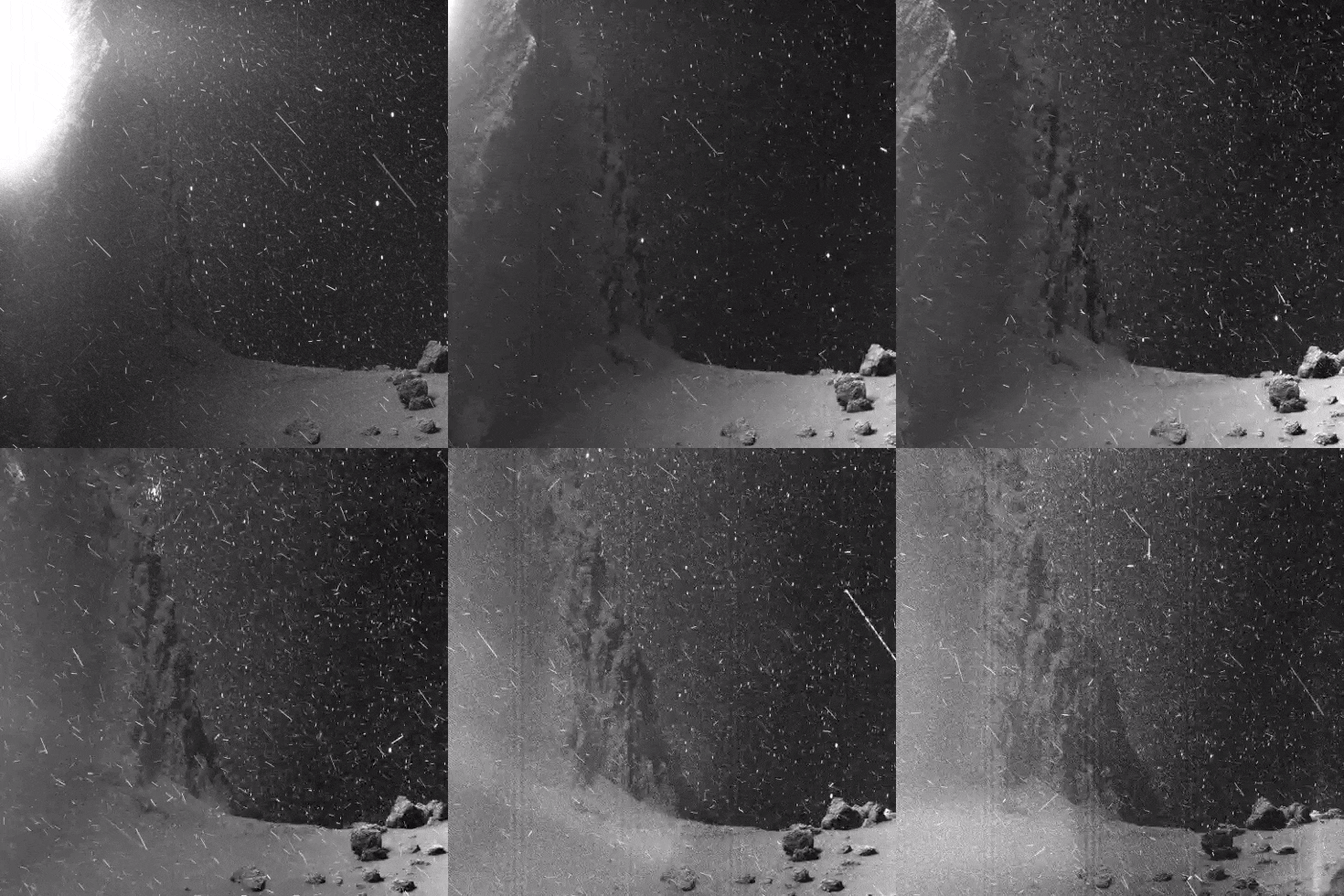
VIDEO FROM THE SURFACE OF A COMET

This is truly incredible.

Details:

Remember Rosetta? That comet-chasing European Space Agency (ESA) probe that deployed (and accidentally bounced) its lander Philae on the surface of Comet 67P? This GIF is made up of images Rosetta beamed back to Earth, which have been freely available online for a while. But it took Twitter user landru79 processing and assembling them into this short, looped clip to reveal the drama they contained.

while the stuff in the foreground is dust/ice on the surface of the comet itself, the background is actually stars. i saw a stabilized video where you can really make it out, and it blew my mind.

here’s the stabilized clip, if anyone’s interested

@izzyovercoffee

quantumspork:

skunkbear:

Here’s the orbital period of our solar system’s 8 major planets (how long it takes each to travel around the sun). Their size is to scale and their speed is accurate relative to Earth’s. The repetition of each GIF is proportional to their orbital period. Mercury takes less than 3 months to zoom around Sol, Neptune takes nearly 165 years.  

fuck this gifset do you know how long i sat here waiting for fucking neptune to drag its lazy ass into the frame

nasa:

The Sun is not silent. The low, pulsing hum of our star’s heartbeat allows scientists to peer inside, revealing huge rivers of solar material flowing around before their eyes — er, ears.

Data from ESA (European Space Agency) and NASA’s Solar and Heliospheric Observatory (SOHO), sonified by the Stanford Experimental Physics Lab, captures the Sun’s natural vibrations and reveals what can’t be seen with the naked eye.

In this audiogram, our heliophysicist Alex Young explains how this simple sound connects us with the Sun and all the other stars in the universe.

This piece features low frequency sounds of the Sun. For the best listening experience, listen to this story with headphones. 🎧 

Read more: https://go.nasa.gov/2LMW42o

Make sure to follow us on Tumblr for your regular dose of space: http://nasa.tumblr.com.

viktoriascombover:

hotcommunist:

fetus-cakes:

lambrini-socialism:

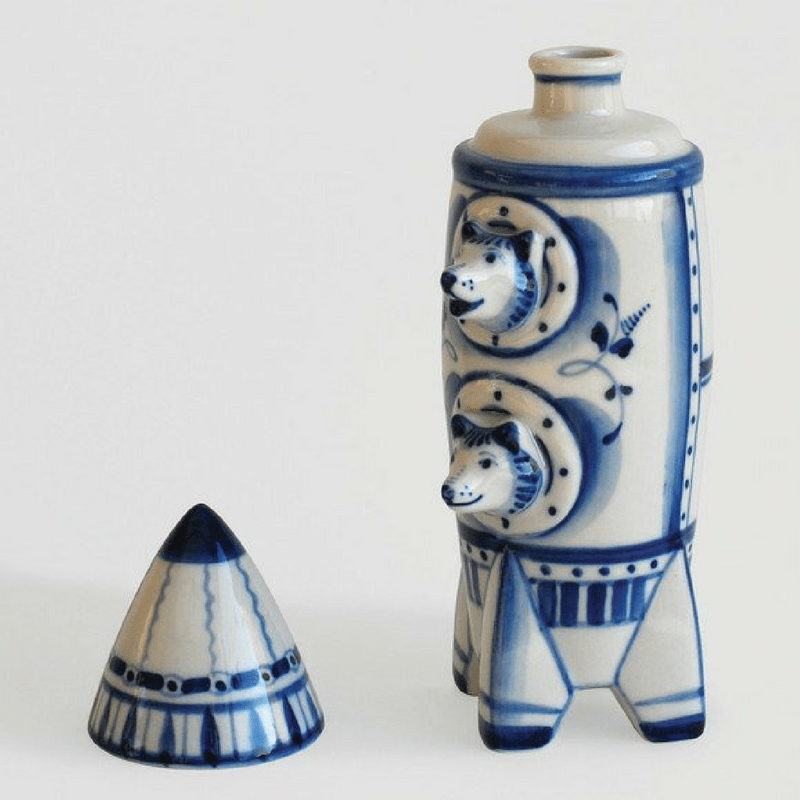
belka (Белка – literally “squirrel”) and strelka (cтрелка – “little arrow or star”) vodka decanter, 2017.

I thought they were dogs and this was a reference to Laika

@fetus-cakes Laika went up alone in 1957, but there were lots if other space dogs, and they usually went up in pairs! Belka and Strelka went up in 1960, and were the first dogs to return to earth safely, only suffering minor injuries. They even went on to have puppies, and their descendants are still alive today!

it makes me happy they went up together and were less lonely and both came down alive

Wanna learn more about Astronomy?

timepetalscollective:

waltzing-with-my-inner-geek:

timepetalscollective:

The stars, the galaxies, everything amazing about the Universe. There’s so much to know and learn, and that can’t always happen because while many would love to add it to their fanworks (Trying to put the Doctor into better character, really cool things to have happen with the Tardis, amazing sights to describe, help creating new planets) or even just because out of desire for the knowledge – but it doesn’t always feel very accessible, and Uni classes are expensive.

Eff that. Here is some free stuff to help you out!

image

Open Courseware Classes

You can take classes from big name universities for free, online. All course materials are completely free, lectures, etc.

Lectures


Documentaries


Books


Scholarpedia’s Astrophysics Main Page is def. a thing to check out as well!

If you’re interested, we are also running a weekly freeform event where if you contribute, your name will be put into a randomizer each week to win a star!

Hope you enjoy my stash!

-Mod @natural–blues

Neil Degrasse Tyson also wrote a book called Astrophysics for People in a Hurry. I’ve only read parts of it, but it seems very accessible and definitely worth adding to the list 😀

I do believe this is a good link for Astrophysics for People in a Hurry, which is a brilliant contribution! It’s a free download link.