what if i told you that a lot of “Americanized” versions of foods were actually the product of immigrant experiences and are not “bastardized versions”
That’s actually fascinating, does anyone have any examples?
I took an entire class about Italian American immigrant cuisine and how it’s a product of their unique immigrant experience. The TL;DR is that many Italian immigrants came from the south (the poor) part of Italy, and were used to a mostly vegetable-based diet. However, when they came to the US they found foods that rich northern Italians were depicted as eating, such as sugar, coffee, wine, and meat, available for prices they could afford for the very first time. This is why Italian Americans were the first to combine meatballs with pasta, and why a lot of Italian American food is sugary and/or fattening. Italian American cuisine is a celebration of Italian immigrants’ newfound access to foods they hadn’t been able to access back home.
(Source: Cinotto, Simone. The Italian American Table: Food, Family, and
Community in New York City. Chicago: U of Illinois, 2013. Print.)
that corned beef and cabbage thing you hear abou irish americans is actually from a similar situation but because they weren’t allowed to eat that stuff due to that artificial famine
❤ FOOD HISTORY ❤
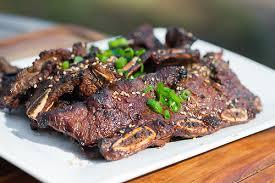
Everyone knows Korean barbecue, right? It looks like this, right?
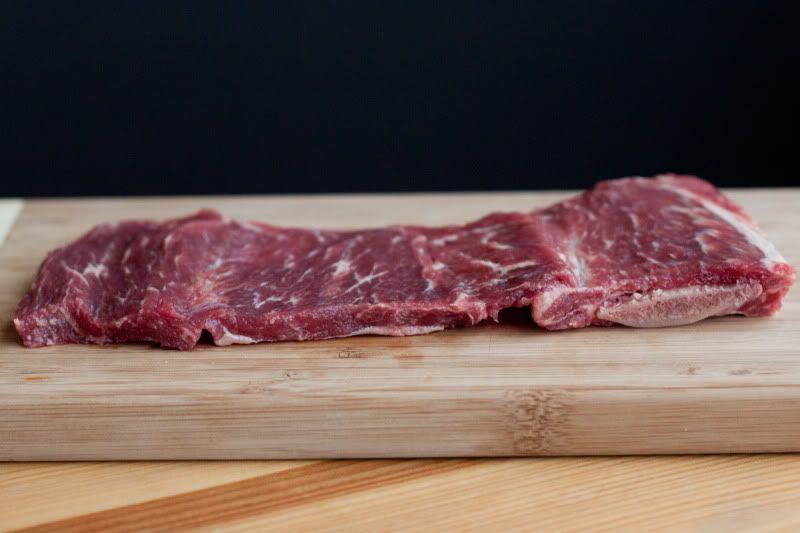
Well, this is called a “flanken cut” and was actually unheard of in traditional Korean cooking. In traditional galbi, the bone is cut about two inches long, separated into individual bones, and the meat is butterflied into a long, thin ribbon, like this:
In fact, the style of galbi with the bones cut short across the length is called “LA Galbi,” as in “Los Angeles-style.” So the “traditional Korean barbecue” is actually a Korean-American dish.
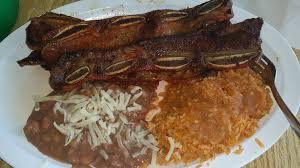
Now, here’s where things get interesting. You see, flanken-cut ribs aren’t actually all that popular in American cooking either. Where they are often used however, is in Mexican cooking, for tablitas.
So you have to imagine these Korean-American immigrants in 1970s Los Angeles getting a hankering for their traditional barbecue. Perhaps they end up going to a corner butcher shop to buy short ribs. Perhaps that butcher shop is owned by a Mexican family. Perhaps they end up buying flanken-cut short ribs for tablitas because that’s what’s available. Perhaps they get slightly weirded out by the way the bones are cut so short, but give it a chance anyway. “Holy crap this is delicious, and you can use the bones as a little handle too, so now galbi is finger food!” Soon, they actually come to prefer the flanken cut over the traditional cut: it’s easier to cook, easier to serve, and delicious, to boot!
Time goes on, Asian fusion becomes popular, and suddenly the flanken cut short rib becomes better known as “Korean BBQ,” when it actually originated as a Korean-Mexican fusion dish!
I don’t know that it actually happened this way, but I like to think it did.
Corned beef and cabbage as we know it today? That came to the Irish immigrants via their Jewish neighbors at kosher delis.
The Irish immigrants almost solely bought their meat from kosher butchers. And what we think of today as Irish corned beef is actually Jewish corned beef thrown into a pot with cabbage and potatoes. The Jewish population in New York City at the time were relatively new immigrants from Eastern and Central Europe. The corned beef they made was from brisket, a kosher cut of meat from the front of the cow. Since brisket is a tougher cut, the salting and cooking processes transformed the meat into the extremely tender, flavorful corned beef we know of today.
The Irish may have been drawn to settling near Jewish neighborhoods and shopping at Jewish butchers because their cultures had many parallels. Both groups were scattered across the globe to escape oppression, had a sacred lost homeland, discriminated against in the US, and had a love for the arts. There was an understanding between the two groups, which was a comfort to the newly arriving immigrants. This relationship can be seen in Irish, Irish-American and Jewish-American folklore. It is not a coincidence that James Joyce made the main character of his masterpiece Ulysses, Leopold Bloom, a man born to Jewish and Irish parents.
My bros I have been doing a lot of
reading about Wacky WWII Hijinks lately and I want to tell you a
story because I love it okay
once upon a time there was a dude in
Spain named Juan Pujol Garcia. Pujol was a chicken farmer. Pujol
hated him some goddamn fascists.
See Spain had recently ended its civil
war, with the fascists taking power. So when WWII broke out in
Europe, Spain technically remained neutral but in practice was buddy
buddy with the Nazis. Juan Pujol Garcia thought this was pretty
bullshit
so soon after war breaks out Pujol
travels to his local British embassy and goes “hey I wanna spy on
the Nazis for you”
“who the fuck are you?” say the
British, and kick him out
but Pujol is not deterred! He still
wants to dunk on some fascists, so now he goes to his local German embassy instead. “hey” he
says, “I wanna spy on the British for you, I sure do hate them”
“yeah
okay” say the Germans “that seems pretty legit”
and
just like that Pujol now officially works for the Abwehr, the German
intelligence agency. They hand him some spy gear (invisible ink and
such) and instruct him to travel to Lisbon, and from there make his
way into the UK. So Pujol heads to Lisbon, and a little while later
writes to his German handlers telling them he’s made it to England
Pujol
had not made it to England. He had, in fact, made it to the Lisbon
public library, where he checked out a number of English guide books
and set about just wholesale making shit up
this
is slightly complicated by the fact that, for example, he completely
did not understand British currency and all his expense reports were
basically gibberish. He also reported things like bribing Scotsmen,
because the people of Glasgow would “do anything for a litre of
wine” (an actual quote) because, hey, people in Spain like wine so
that’s probably the same right?
Here
is where it starts to get really crazy, because the Abwehr loves
this. “wow this dude is a
great spy” they say, because apparently none of them had ever been
the England either. In fact, they are so pumped about this new
awesome spy that the British start to get worried
you
see, by this time the British had cracked German’s supposedly
unbreakable Enigma code and were totally dunking on the Nazis by
reading basically all of their ~super top secret~ radio
transmissions. And, crucially, they’d become so good at breaking and
reading traffic that there were literally no German spies in England.
The Germans would set up a spy drop (usually dropping dudes in by
parachute in the middle of the night), the British would intercept
the message and then just scoop the dudes up as soon as they landed
in a move that must have been SUPER embarrassing to the spies
so
there are no German spies in the UK because they’re all sitting in a
prison run by MI5 (although some are being run under supervision as
double agents, feeding Germany bullshit). But suddenly MI5 is picking
up all this traffic from the Germans talking about their super great
spy- a spy the British do not have in their jail
“oh
shit” says MI5, and starts rereading all the transmissions they
have to and from this mysterious super spy.
“hey
wait” says MI5, upon actually reading the shit the spy was sending.
“someone is playing silly buggers, pip pip cheerio”
At
this point, Pujol, still in Lisbon, had actually been approaching the
British embassy again, repeatedly, but apparently “I am literally
an Abwehr agent and would like to offer you my services” wasn’t
interesting enough, because he was repeatedly turned away, again. It wasn’t until MI5 started
asking around that one of the embassy staff was like “oh yeah we
know that guy”
so in
1942 the British finally make contact with Pujol and he officially
becomes a spy for MI5. They move him to London and assign him a case
officer so he can start making up even better bullshit
and he
does. Once actually in London, Pujol reports to the Abwehr that he’d
recruited a whole slew of informants- from a bunch of Welsh Aryans to
disaffected army officers. He ends up with a network of 20+
sub-spies, all feeding him information from around the UK
none of these people actually exist
Pujol
just straight up invented like 20 people, keeping careful track of
their fake personalities, names, and activities. With the help of
MI5, the information he sends becomes even better- a mix of true but
ultimately useless facts and actually important intel timed to arrive
in Germany just slightly too late to be of any use. He and his “spy
network” become the Abwehr’s most trusted agents
Pujol,
now codenamed Agent Garbo (for his acting skills), ends up playing a
huge role in the run-up to D-Day, where the Allies mounted a huge
intelligence campaign to convince Hitler that the planned site of
attack was going to be Calais and not Normandy (this was Operation
Fortitude and you should absolutely look it up for more Wacky WWII
Adventures). Obviously you know how this ended
crazily
enough, the Abwehr never figured out that Pujol was a double agent.
After the war he received both the Iron Cross Second Class (which
require personal authorization from Hitler), and a
Member of the Order of the British Empire (from King George VI)
unable
to resist being totally fucking ridiculous,
Pujol turned down MI5’s post-war offer to continue spying, but this
time against the USSR. “no,” he said “just help me fake my own
death and then I’m moving to Venezuela”
and
that’s exactly what he did. Juan Garcia Pujol died in 1988, at the
age of 76
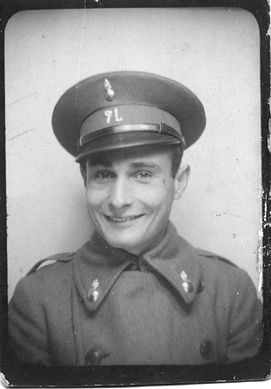
Okay I’m just editing my reblog to add this picture of Juan Pujol Garcia because I feel that it adds so much to the story to picture him doing ALL THE ABOVE with this expression:
What a legend.
Weaponized foreign shitposting
this is my favorite post in a very, very long time.
“Authors can’t use it in fantasy fiction, eh? We’ll see about that…”
–Terry Pratchett, probably
Try to implement anything but a conservative’s sixth grade education level of medieval or Victorian times and you will butt into this. all. the. time.
There was a literaly fad in the 1890′s for nipple rings for all genders(and NO, it was NOT under the mistaken belief that it would help breastfeeding–there’s LOTS of doctors’ writing at the time telling people to STOP and that they thought it would ruin the breast’s ability to breastfeed well, etc). It was straight up because the Victorians were freaks, okay Imagine trying to make a Victorian character with nipple rings. IMAGINE THE ACCUSATIONS OF GROSS HISTORICAL INACCURACY
people just really, REALLY have entrenched ideas of what people in the past were like
tell them the vikings were clean, had a complex democratic legal system, respected women, had freeform rap battles, and had child support payments? theyd call you a liar
tell them that chopsticks became popular in china during the bronze age because street food vendors were all the rage and they wanted to have disposable eating utensils? theyll say youre making that up
tell them native americans had a trade network stretching from canada to peru and built sacred mounds bigger then the pyramids of giza? you are some SJW twisting facts
ancient egypt had circular saws, debt cards, and eye surgery? are you high?
our misconception of medieval peasants being illiterate and living in poverty in one room mud huts being their own creation as part of a century long tax aversion scam? you stole that from the game of thrones reject bin
iron age india had stone telescopes, air conditioning, and the number 0 along with all ‘arabic’ numbers including algebra and calculus? i understand some of those words.
romans had accurate maps detailing vacation travel times along with a star rating for hotels along the way, fast food restaurants, swiss army knives, black soldiers in brittany, traded with china, and that soldiers wrote thank-you notes when their parents sent them underwear in the mail? but they thought the earth was flat!
ancient bronze age mesopotamia had pedantic complaints sent to merchants about crappy goods, comedic performances, and transgender/nobinary representation? what are you smoking?
 Time's Vengeance