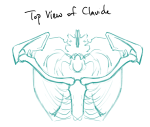
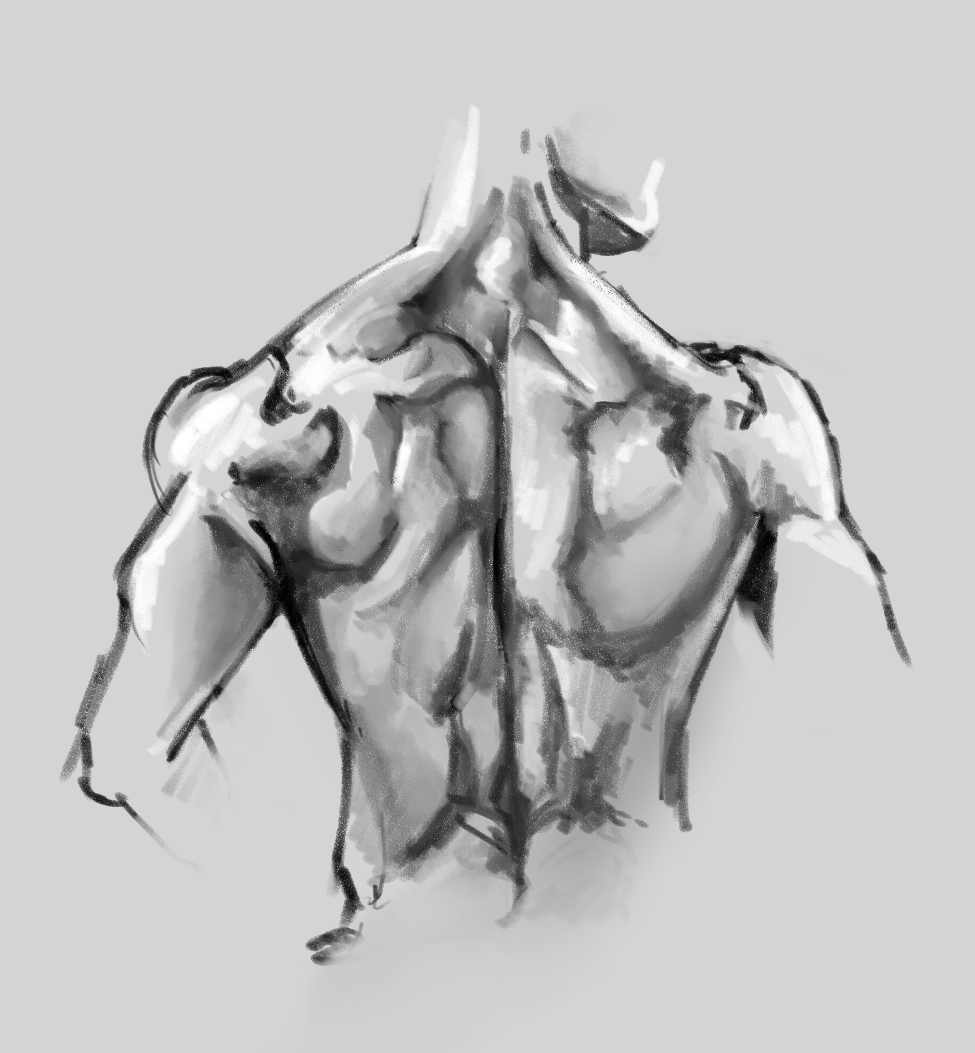
shoulder blades: most of the upper back muscles attach to them directly, placement is affected by the arms. They can get obscured on very muscular backs, but most people these are the most dominant features!
7th cervical vertebra: neck bone that sticks out in most people, it sits in the center of that diamond shaped tendon in the middle of the trapezius
Also, obviously always keep the general shape of the ribcage and spine in mind, it was too much of a pain to draw them all in lol.
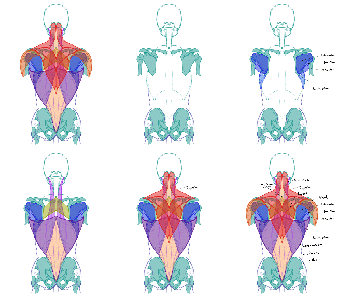
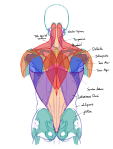
BACK MUSCLES
Erector Spinae: make the column-like structures around the spine,
they extend all the way up to the neck, but you really only see the
bottom part.
Latissimus Dorsi: are very thin, so most of the time you only see the structures underneath (such as the erector spinae). But when flexed, (for example, when climbing), you can see here on Jimmy Webb’s back that swooping curve it makes under the armpits.
The lats are also responsible for most of a person’s upper body strength and are the “V” shaped part of the back. For example, it’s how Bruce Lee was so strong despite being a small guy. Just look at those wings, man.
Infraspinatus, Teres Minor, and Teres Major:
sit on the shoulder blade itself, and connects it to the top of the arm
bone. These are responsible for a lot of the crazy shapes you see in
bodybuilders’ backs.
Underneath them is the serratus anterior, which technically isn’t a back muscle but sits on the side of the ribs. These form that zig-zag pattern on the ribs that makes people look super ripped when visible with the external obliques, both wrapping around the sides of the torso. They’re not technically back muscles but fill out the silhouette, so it’s good to keep them in mind.
the glutes/butt muscles… they go farther up the back than one might assume and they, along with the pelvis, do affect the surface appearance of the lower back.
Rhomboid: simple shape, attaches from the inner edge of the shoulder blades to the middle of the spine at the 7th cervical vetebra to about the 4th or 5th thoracic vetebra. It does not overlap with the latissimus dorsi
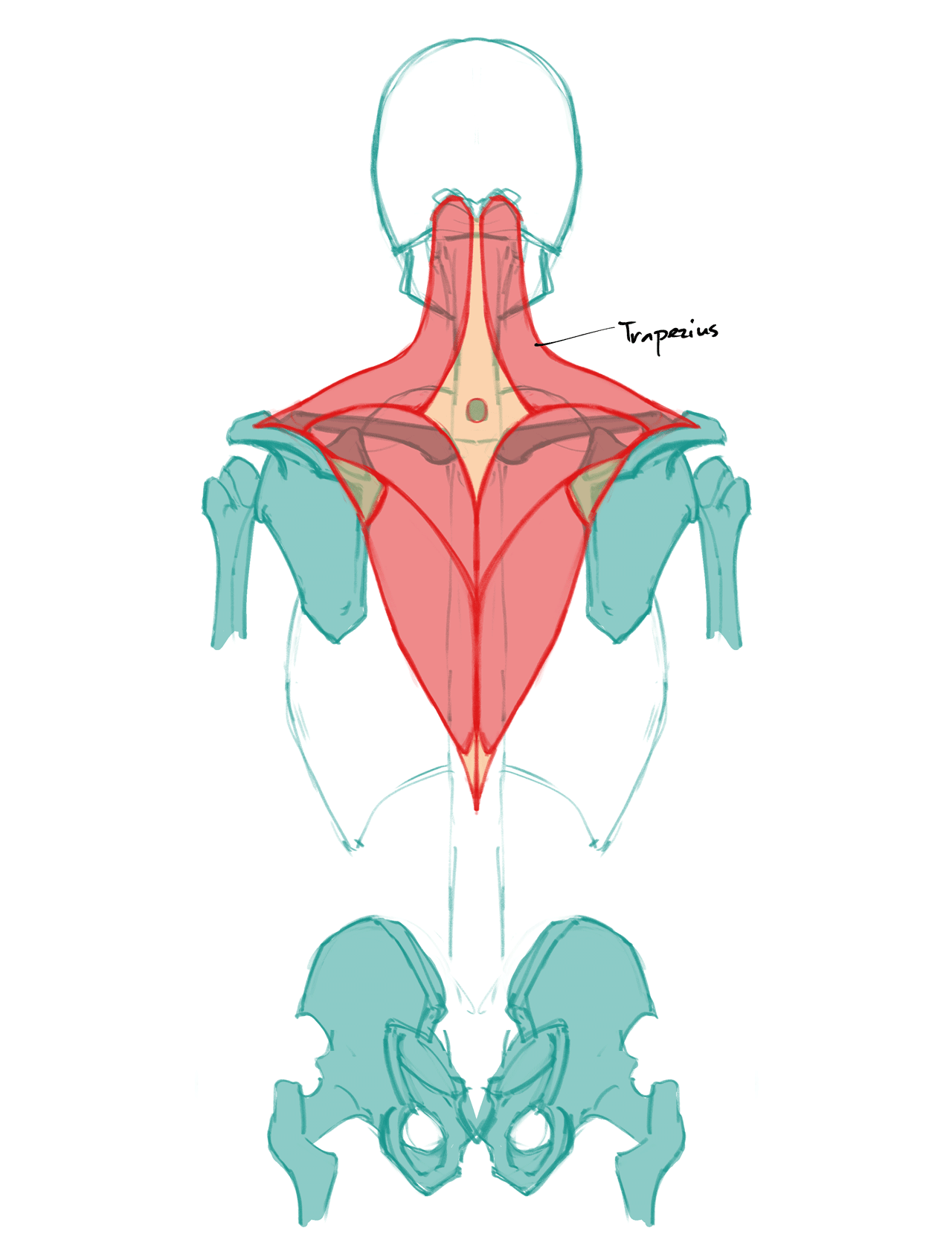
Trapezius: divided roughly in the top, middle, and bottom sections. The top is quite thick and cylindrical and makes the sloping shape from the neck to the shoulders.
The bottom part is very thin; like the latissimus dorsi, the forms underneath it are visible when relaxed, making the rhomboid visible if it is flexed and the traps are not. Also not where the bottom part’s tendons attach to the shoulder blades; it outlines the curve of the shoulder blades even in people who are covered in brains muscles.
When fully flexed, it doesn’t taper into a point, but makes a small “w” shape at the bottom.
The 7th cervical vertebra sits at the center of the diamond-shaped tendons between the first and second sections of the trapezius. This part appears recessed in very muscular people.
Deltoid: not really a back muscle, but they overlap with the Infraspinatus and insert into the upper ridge of the shoulder blades, so it’s good to see how they interact with the others.
Ah, now for an example, featuring Thor himself. Note the curve where the traps meet the shoulder blades, the diamond-shaped tendon, and the rough “w” shaped contour of the lower back. Also note the two dimples, which is formed by the pelvis bones. They tend to be more prominent in women, although they are found in both men and women.
Try to find the back muscles on other people yourself, and then GET DRAWING
(PS, Generally it’s best to be able to simplify the forms instead of trying to render straight away – that’s how you know you really internalized the anatomy! I… honestly still don’t understand the back enough to do that yet, hence the lack of examples, unlike with the forearms post. But nonetheless, I hope that this is still useful as a general reference. I know it’s helped me at least remember what the different parts are, even if I don’t yet have a grasp of how they interact in motion!)
This app is called iOrnament, designed by a math professor and incredibly fun to play with! Well worth buying, I make designs with it every day and it has a lot of fascinating options and effects. Here’s his trailer for how to use it. He also made another app called iOCrafter that creates printable patterns you can assemble. Who doesn’t need a stack of Platonic solids to brighten up your space?
The iOrnament App grew out of a sequence of related programs that were developed over the past 30 years. The oldest ancestor of iOrnament is a program “Ornament” that was written by the author and presented at the symmetry exhibition in Darmstadt 1986. The program allowed to draw black and white wallpaper pictures at that time on an Atari computer. Inspired by this similar programs were written that ran in various Mathematics exhibitions among them the exhibition ix-quadrat at TU Munich and the German Museum in Munich. The amazing fact about these kind of programs is that everyone starting from a three year old child to an highly intellectual adult can at the same time be creative, have fun with them and learn something about mathematical structures.
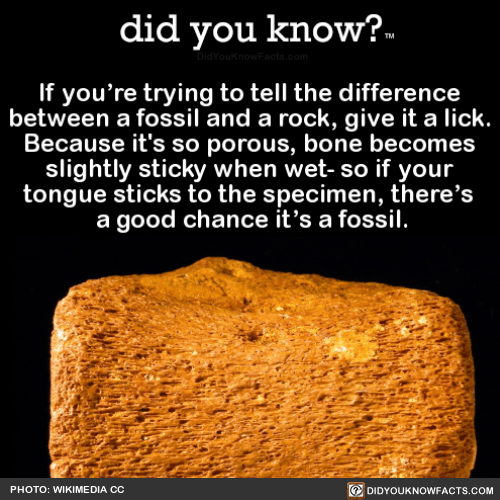
If you’re trying to tell the difference between a fossil and a rock, give it a lick. Because it’s so porous, bone becomes slightly sticky when wet- so if your tongue sticks to the specimen, there’s a good chance it’s a fossil. Source Source 2 SourceSource 2
I made this cute game with my friend over the weekend for Ludum Dare (an online game jam). I did the a lot of the art & music & a chunk of the programming. It’s very cute and you can play it in the browser. T H A N K S
I discovered something useful today, taking breaks or exercising never helps me but THIS does, sharing to save a life
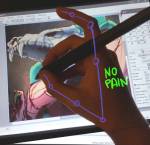
I just found out that some pro artists that work for companies like Dreamworks etc sometimes hold their pens this or similar way so it gotta work. Recently I spent 5 days on drawing for long periods of time (we talk about min 5 hours in one go to max 12 hours long crunch) and not once did my hand bother me.
@ girls who are starting to realize they’re bi, or have just begun identifying as bi, or who have come to terms with identifying as bi:
I love you!
Bisexuality is good. Being bi is good. Identifying as bi is good.
There is no “good” or “bad” way to be bi.
You are not dirty, wrong, impure, bad, or fake for identifying as bi.
Your identity is pure, whole, and important.
You are not “half” of anything.
You don’t have to date anyone or have romantic/sexual experiences to wholly identify as bi. You are just as bi as bi girls who’ve dated people before.
Whether you are in the closet or decide to come out, your decisions with respect to how you identify are entirely up to you and can’t be dictated by anyone else.
I hope you come to love your identity, I hope you make peace with internalized biphobia, and I hope you become confident in who you are!
I JUST PASSED THIS MANNEKIN AND I GOT SO HAPPY!! Fuck the society ideals, this is the real deal!!
WHOA. A BELLY OH MY GOD!
MORE
MAKE THEM BIGGER.
MOOOOOAARRRR
I made this post years ago and it hasn’t gotten that many notes but i see it now and then. This store still has this (and more of these) mannequin. Still makes me happy that we’re moving away from the stereotypes.




 Time's Vengeance